Hair loss in women can feel deeply personal and even scary. Whether you’re a new mom watching clumps collect in your brush or you’re dealing with sudden thinning in your 30s, 40s, or beyond, you’re not alone.
In fact, up to 50% of women will experience noticeable hair loss at some point in their lives. Yet despite how common it is, it’s still rarely talked about in a supportive, shame-free way.
At True to Life, we believe that knowledge is empowering, and when you understand what’s happening to your hair, you’re in a stronger position to take care of it. This article explores why women lose hair, particularly around postpartum hair loss, and what you can do to support regrowth naturally and sustainably.
What Causes Hair Loss in Women?
Hair loss isn’t always about ageing or genetics. In women, it can be influenced by a complex mix of:
● Hormonal shifts
● Stress and emotional trauma
● Nutritional deficiencies
● Medical conditions
● Scalp inflammation
● Certain hairstyles or treatments
● Product build-up or harsh ingredients
The key is identifying the root cause, not just treating the symptoms.
Postpartum Hair Loss: What’s Really Going On?
After giving birth, many women notice their hair shedding in large amounts, usually between 2 and 4 months postpartum. This condition is known as postpartum telogen effluvium — a temporary, hormone-related hair shedding phase.
During pregnancy, high levels of estrogen prolong the hair growth phase, resulting in thicker and fuller-looking hair. Once estrogen levels drop after delivery, the hair resumes its normal cycle — and the strands that were “on pause” suddenly shed all at once.
It’s normal. It’s temporary. But that doesn’t make it any less frustrating.
Many moms are caught off guard, especially when they’ve already gone through so many physical and emotional changes. The good news? With the right care, your hair can recover and even grow back stronger than before.
Other Common Types of Hair Loss in Women
Not all female hair loss is related to postpartum. Here are a few other common types:
Hormonal Hair Loss
Often related to PCOS, perimenopause, or thyroid disorders. Hair may thin at the crown, temples, or all over.
Stress-Induced Shedding
Major stress or trauma (even illness) can cause sudden shedding — usually noticeable a few months after the event.
Nutritional Deficiency
Lack of iron, zinc, biotin, or protein can impact hair strength and growth. Restrictive diets can play a role, too.
Hair Loss from Damage
Overuse of relaxers, bleach, or tight hairstyles can cause breakage or even permanent damage to the follicles over time.
Why Traditional Hair Products Often Make It Worse
Most mainstream shampoos and conditioners are filled with silicones, sulfates, and synthetic fillers that coat the hair without treating the scalp – the root of the problem.
These ingredients may give the illusion of smooth, healthy hair… but over time, they can suffocate the scalp, block follicles, and worsen hair loss.
The True to Life Approach: Natural Haircare That Works with You
At True to Life, we don’t believe in one-size-fits-all.
Your hair tells a story — of your hormones, lifestyle, porosity, and even stress levels. That’s why we start every customer journey with a personalised hair assessment, matching your hair needs to the ingredients that support regrowth from the inside out.
For postpartum and hormonal hair loss, we’ve developed a targeted system:
Personalised Shampoo – Thinning Support
A gentle, sulfate-free formula infused with rosemary, panthenol, caffeine, and saw palmetto to stimulate follicles and reduce excess shedding.
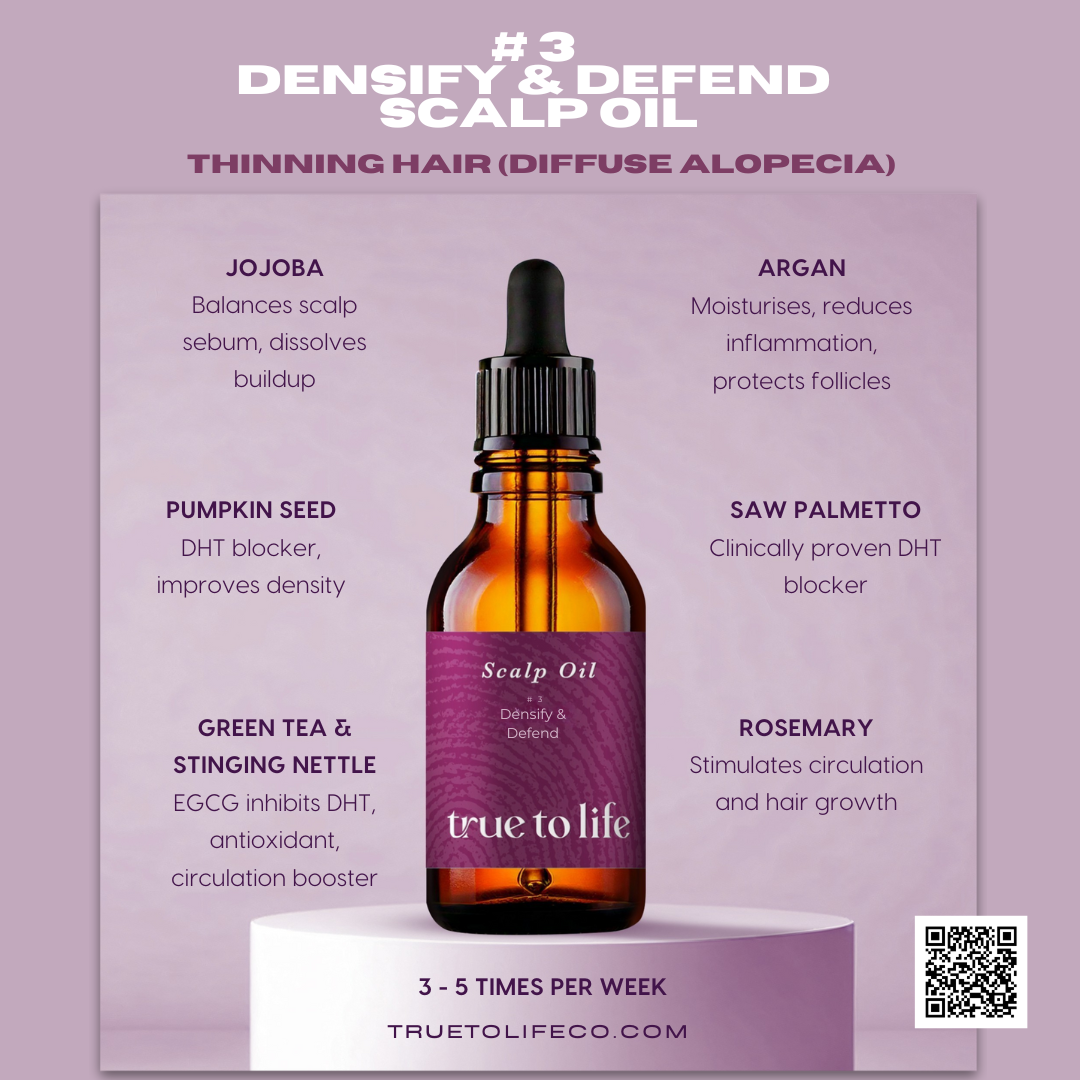
#3 Spot Nourish Scalp Oil – Hormonal Repair
Crafted with peppermint, pumpkin seed oil, green tea, and rosemary — ingredients clinically shown to reduce DHT, increase blood flow, and balance inflammation at the follicle.
These formulas work in harmony with your hair’s porosity and scalp condition, not against it.
Nourishing Conditioner
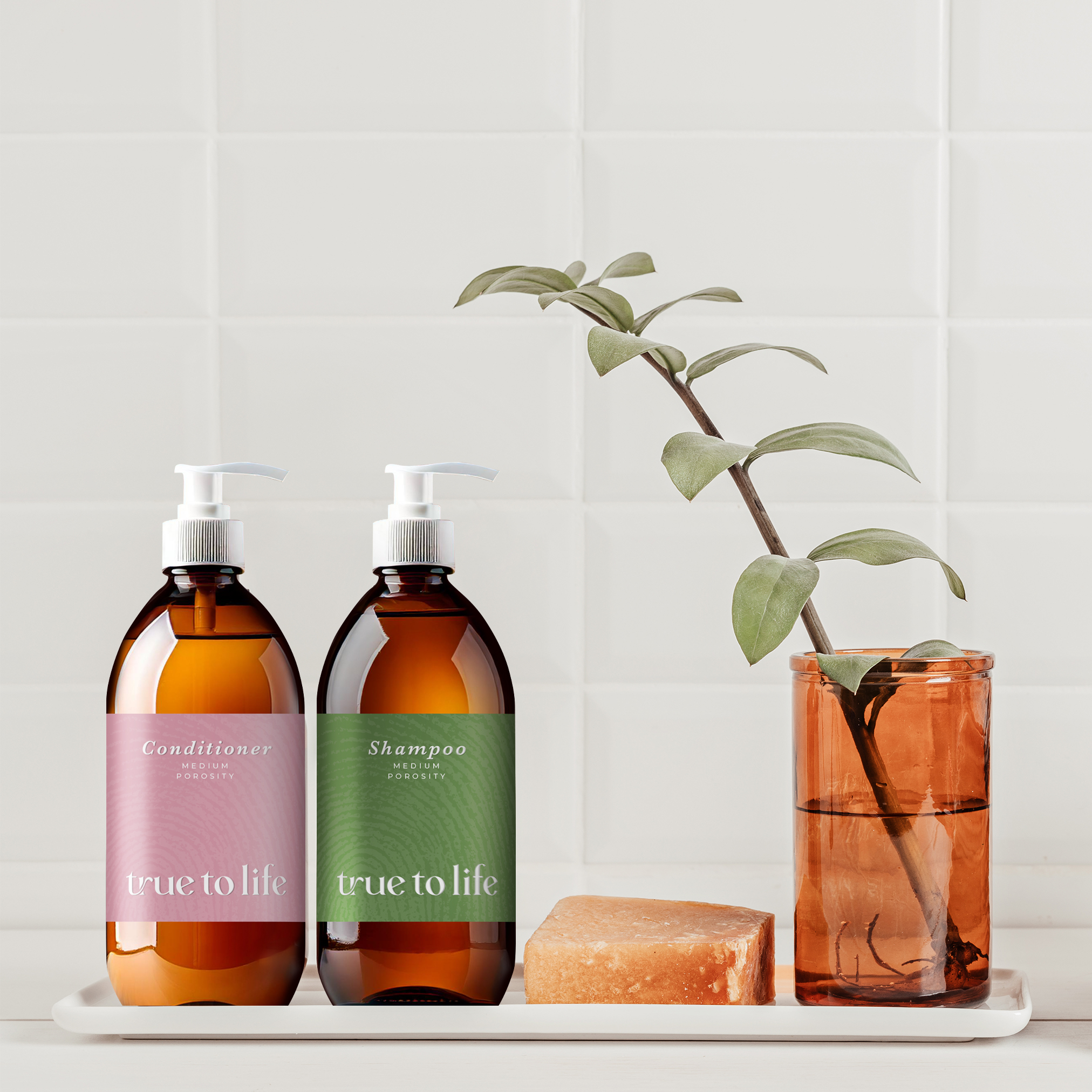
For your hair not to break, which also leads to a perceived thinning, you need a good conditioner targeted at the hair concerns you want to focus on. You select your hair concerns, and we choose the right ingredients to include in your conditioner.
How Long Does It Take to See Results?
Hair grows slowly, usually about 1 cm per month. So even if your scalp starts improving after 2–3 weeks, visible regrowth often takes 8–12 weeks with consistent use.
During this transition, patience is your superpower.
Here’s what many of our customers experience:
● Weeks 1-2: Less itching and inflammation on the scalp, with visible, thicker hair strands.
● Weeks 3-4: A noticeable reduction in shedding.
● Weeks 5 – 8: New growth along the hairline.
● Month 3: Fuller, stronger strands and easier styling. You will see small
Ready to Support Your Hair the Way It Deserves?
Whether you’re 3 months postpartum or simply tired of watching your hair thin with no answers, you’re not alone — and you don’t have to go through this without support.
Take our quick hair quiz to get matched to your personalised formula and begin your journey to stronger, healthier hair.
15% OFF your first order – use code: TRUETOLIFE1 Take the Hair Quiz Now