As a collective wave of health consciousness continues to take form across social media, sunscreen has made it onto the chopping block of products to avoid. While the health and wellness promoters on social media can be credited for directing the masses towards healthier ways of living, they sometimes get it wrong.
“The growing mistrust of sunscreen and the development of the anti-sunscreen movement are based on the misunderstanding of a 2019 research study conducted by the US Food and Drug Administration (FDA). The study’s ultimate findings were that the over-application of sunscreen resulted in traces of certain ingredients in the cream making their way into the bloodstream. The conditions under which the experiment took place were exaggerated, with the participants being required to use an excessive amount of sunscreen to test its absorption rate. The importance of sunscreen can never be understated; wearing sunscreen is a healthcare practice before it’s a beauty one,” explained Kamia Soobramoney, Customer Service Manager at Fundamentals Skincare.
With the launch of Fundamentals Skincare’s new Chemical & Mineral SPF 50 sunscreen, South Africans are provided with a vegan-friendly cream designed to protect and complement their skin against the full range of UV rays the Mzansi sun releases. The sunscreen’s innovative blend of mineral and chemical filters extends the cream’s scope of protection while making use of natural ingredients. Fundamentals Skincare understands that the modern consumer cares deeply about what they put onto their skin, and as a result, they’ve developed a cosmeceutical-grade formula with intention and care.
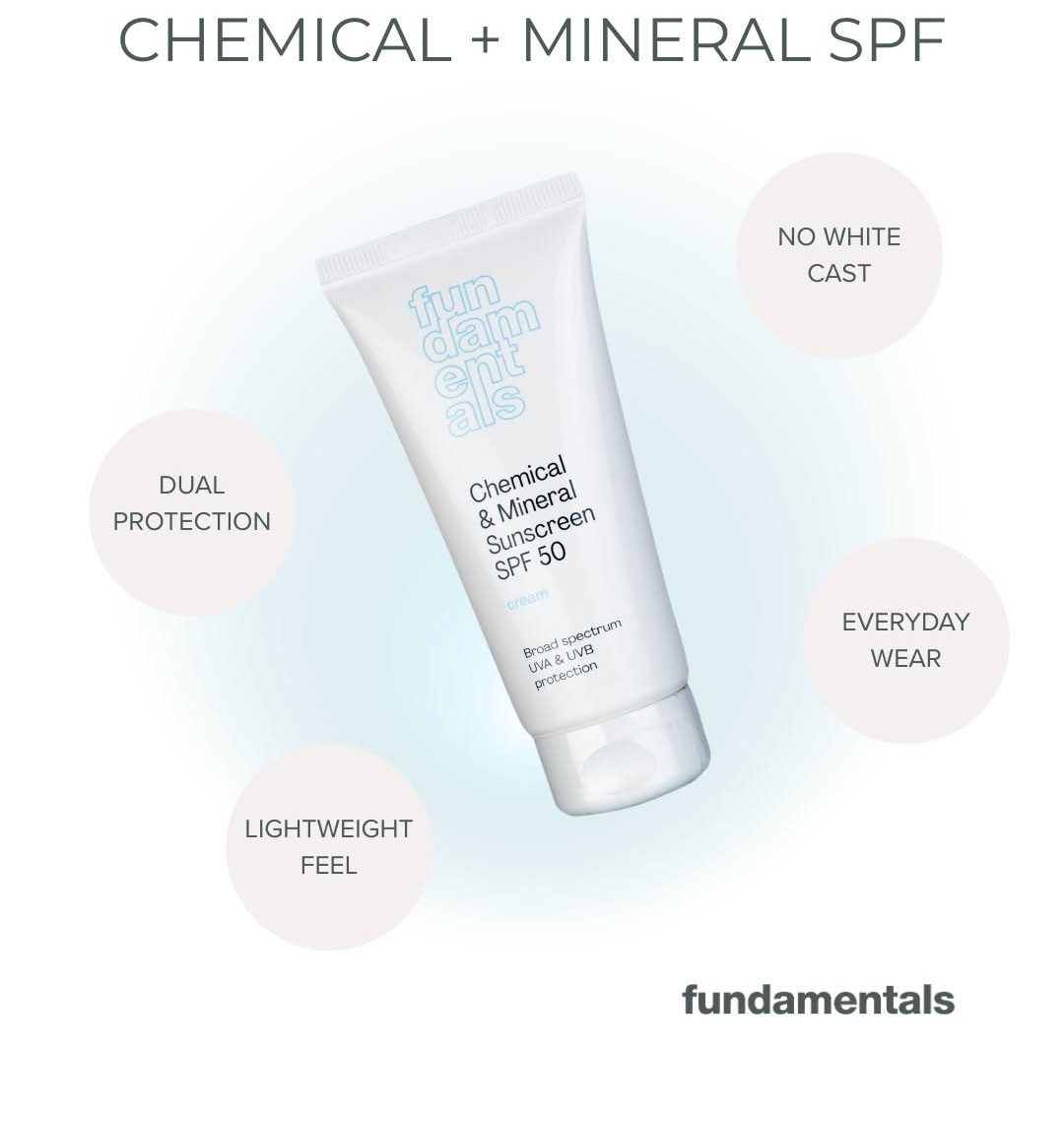
The Chemical and Mineral SPF 50 sunscreen is not merely a product but a cream designed to be at the service of a wide range of skin types. The zinc oxide and titanium dioxide form a protective barrier over the skin, absorbing and reflecting UV rays. Once the zinc has performed its primary protective duty, it doubles as a soothing agent, easing any inflammation or irritation. As the cream maintains the skin’s vitality and longevity, the filters perform their duty with optimal efficiency and class. The sunscreen’s lightweight feel paired with its ability to seamlessly melt into the skin makes it perfect for daily use.
‘Health is wealth’ is not just a catchy phrase but the mentality at the heart of all the latest lifestyle trends and beauty hacks. As Gen Z-ers continue to influence consumer behaviour in the direction of a future where aesthetics and wellness co-exist, here are a few myths to take note of when it comes to the latest anti-sunscreen movement.
Debunking the Anti-Sunscreen Movement:
Myth number 1: Sunscreen is dangerous.
Fact: The sun emits three primary ultraviolet rays known as UVA and UVB. UVA destroys collagen and elasticity, causing premature ageing and melanoma. UVB is the main culprit when it comes to acute sunburn and immune system suppression.
“The sun is dangerous; sunscreen is safe. Our new SPF 50 sunscreen contains a mixture of extremely effective UV filters and blockers to protect the skin against UVA, UVB and UVC rays,” explained Kamia.
Myth number 2: Coconut and tallow oil serve as better alternatives to sunscreen.
Fact: Both coconut and tallow oil can only provide protection within the SPF range of 4–7 and melt under intense heat, leaving your skin vulnerable to UV rays.
Coconut and tallow oil may be effective in combating dry skin but not protecting it. “Our sunscreen’s SPF 50 grading means that it is 98% effective in its ability to shield the skin from harmful UVB radiation,” added Kamia.
Myth number 3: Adopting a seed oil-free diet leaves you immune from being sunburnt.
Fact: Adding or removing food from your diet will not be able to prevent anyone from experiencing sunburn. Sunscreen, on the other hand, has been scientifically proven to be effective in reducing the likelihood of sunburn.
Myth number 4: Individuals with darker skin don’t need to use sunscreen.
Fact: Although the melanin that exists within darker-skinned individuals contains properties that absorb sun rays and shield skin cells, sunscreen is still required to do the work that our bodies can’t.
Myth number 5: The absorption of sunscreen ingredients into the bloodstream is proof of its toxicity.
Fact: The presence of organic filters in the bloodstream is not an indication that sunscreen is toxic. In fact, the body regularly absorbs very small elements of everything human beings interact with daily. This phenomenon is not exclusive to sunscreen.
Fundamentals Skincare will always remain committed to its purpose of providing South Africans with honest and affordable skincare. In the process of maintaining your skin, pursuing wellness and looking good, choose a sunscreen made with your health in mind.